




Believe in a Dream has been inspiring young adults to dream big, believe in themselves and not be afraid to take risks since its launch in 2010.
Based on its founder Jamal Robinson’s belief that economic development and community development are not possible without youth development, the organization now focuses on fostering confidence and growth through immersive experiences in entrepreneurship, leadership, and the arts.
With a dedication to inclusivity, every high school student in the area is welcome, and the classes are free to all.
Here WBOI’s Julia Meek discusses the evolution of the project with executive director Megan McClellan, its purpose in the community and how these creative connections impact the future generation.
Event Information:
Believe in a Dream Annual Gala Fundraiser:
Making Dreams Come True
Parkview Mirro Center
Thursday, March 26
6:00 p.m. to 9:00 p.m.
Purchase tickets and find more information at the Believe in a Dream website.
This is a transcript of our conversation:
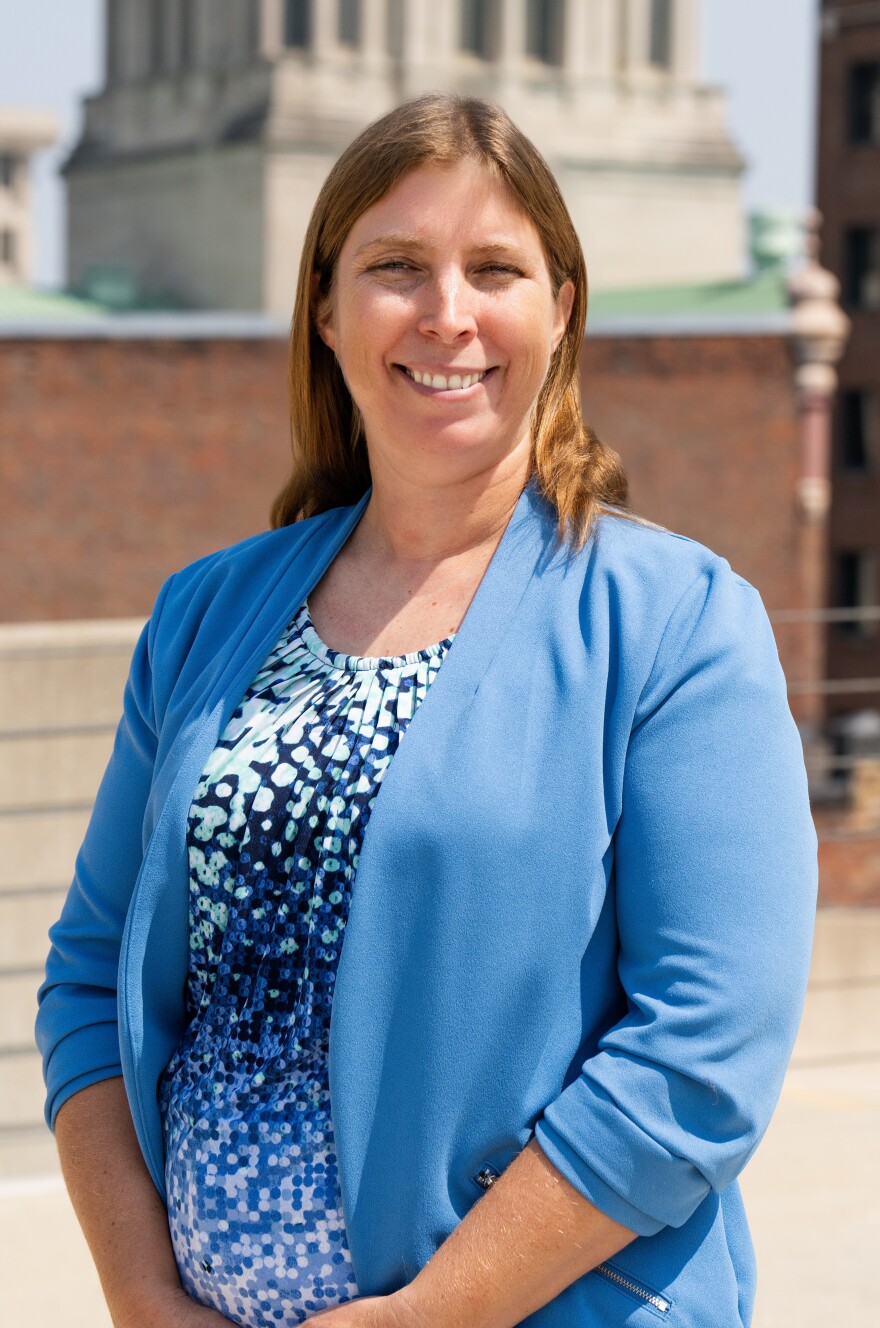
Julia Meek: Megan McClellan, welcome.
Megan McClellan: Hi Julia, thank you for having me on.
J Michael Photography LLC
Julia Meek: Now you have come a long way there at Believe in a Dream since it all began in 2010. Very briefly, what is its core mission?
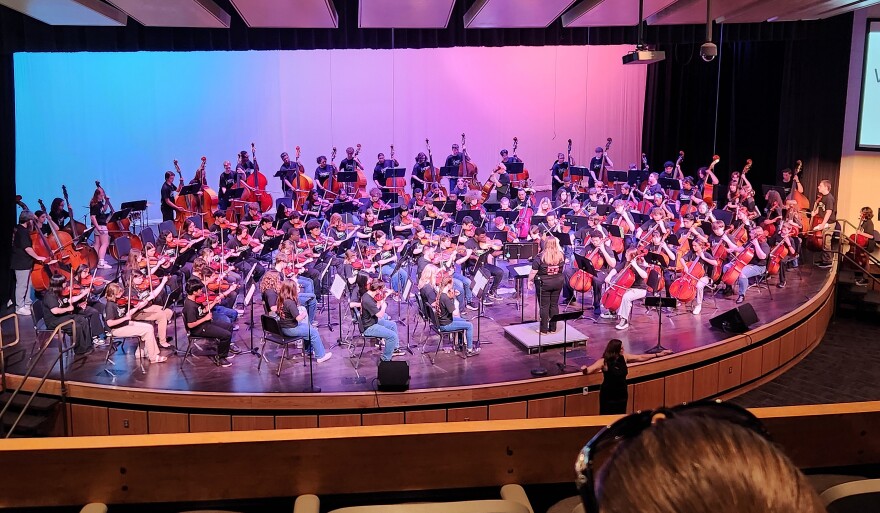
Megan McClellan: The core mission of believe in a dream is to provide middle and high school students with immersive experiences in entrepreneurship, leadership and the arts.
Julia Meek: So a word on each of those individual areas and how they can work together.
Megan McClellan: One of the things we really focus on is helping students achieve their potential, their maximum potential, whatever that is.
So, some of the students will be in multiple programs. Some will only be in one, but whatever it is, we want them to maximize that. For example, in the entrepreneurship program, we have options for students who have a business idea to build upon that and actually create their own business.
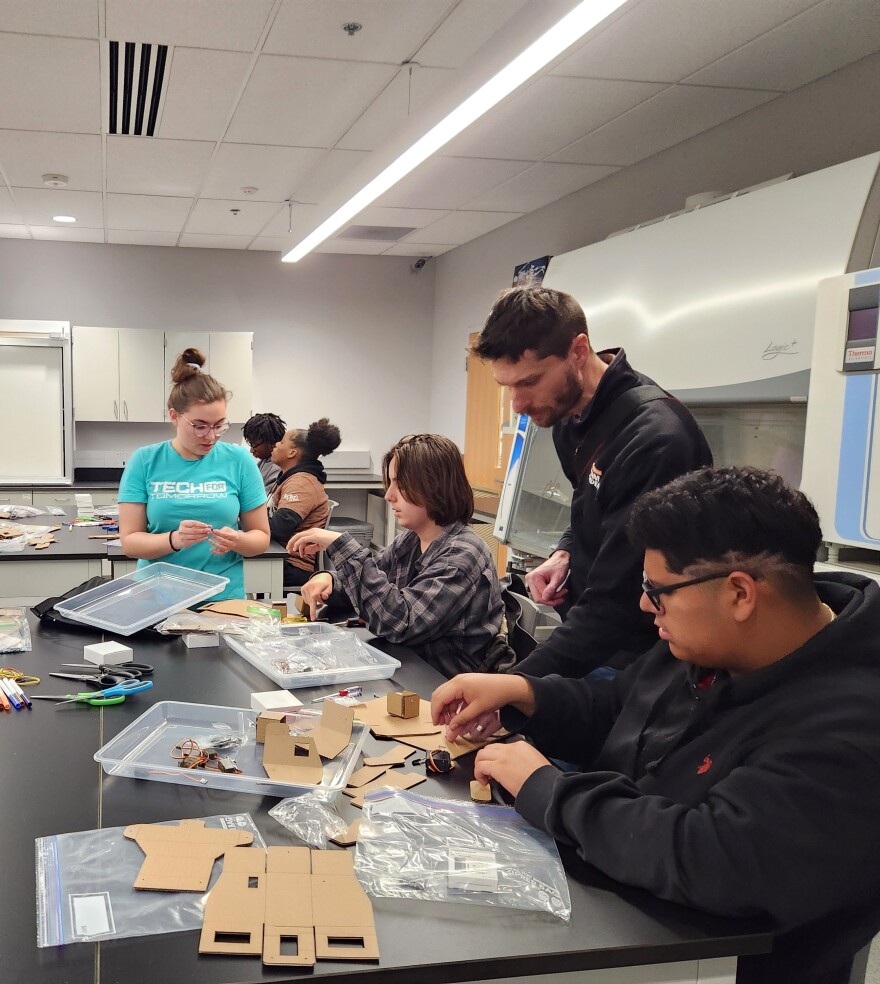
When we asked the students, what did they want to learn about, they wanted to learn about emerging technologies. So now we do sort of a tech entrepreneurship where they’re learning about things like Mars rovers and facial recognition and all kinds of cool stuff.
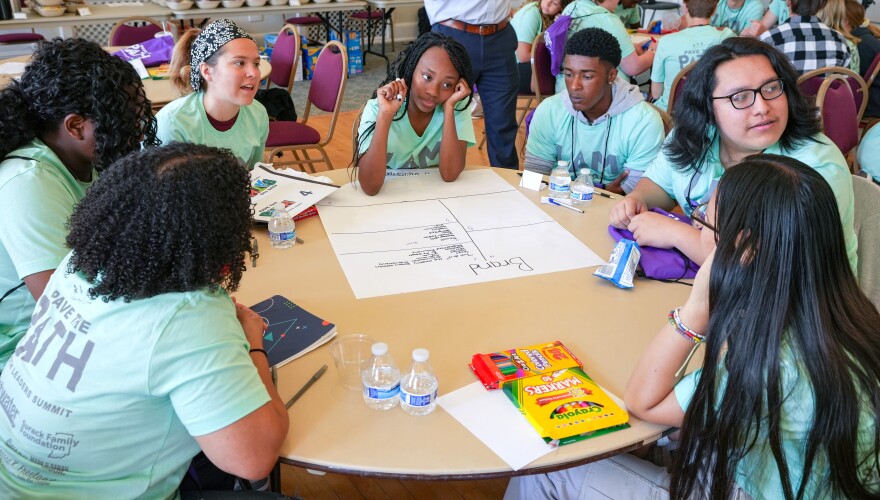
Our leadership program really teaches students about their personal brand, and they learn their Clifton Strengths and really how to be good leaders. And they have the opportunity, once they’ve gone through the program, to come back and help lead the younger students.
Just an amazing opportunity to really have experience in it. And the arts is mainly Musical Arts, where we have opportunities for students to both perform in the community as well as perform on a big stage with lots of other students. So, there’s lots of different opportunities.
Julia Meek: All seeming larger than life that a kid might not usually even think about getting, let alone be able to get.
Megan McClellan: Absolutely we want to give lots of opportunities. So, our programs are all open to students from any school district, home schooled students, anyone who can make it is welcome to attend, and they’re almost all free.
Or if there’s a small cost, say, for some of the technology, we have a cost to cover our equipment. There are scholarships available that are really easy.
All they need to do is reach out and we can cover the cost. So the programs are open to everyone and free of charge.
Julia Meek: Next, how do you find that exact population and draw them into the fold for these wonderful projects? Or actually, how do they find you?
Megan McClellan: Well, a lot of the students come by word of mouth because their friends are doing it, and their friend says, oh, you should come do this with me, or I did this last year. You’d really like this.
Also, sometimes we have administrators or staff members at schools who say, you have real leadership potential. I think you should do the Leadership Program, or you play really beautiful cello. You should join the string jam, something like that.
Also, we reach out via social media and other opportunities, or like this, to reach a wider audience. And they all can just register on our website for any of our programs.

Courtesy/BIAD
Julia Meek: Sounds like you must have a lot of repeat joiners,
then, once they do find one thing that you’re offering.
Megan McClellan: Yes, for sure, especially in like String Jams and the String Dreams concert, our arts programs. In technology, it’s a newer program, so we’re starting to build that base.
The leadership program that’s with the high schoolers, Pave the Path, there’s a program just for freshmen, and then there’s a program for sophomores and juniors. So, a lot of the freshmen then go on the sophomore and junior class.
And then, like I said, once they’ve done that program, they can come back and help lead. So sometimes you have students who have gone on to college or the military, and they actually zoom into these meetings with the younger students.
And it can be really inspirational to them to think that the student who’s in Germany, in the military, or off at Purdue or something, was in their seat just a couple years before, and now they can see where they can go.
Julia Meek: What an immediate and deep at the same time connection for the kids. How exciting is that?
Megan McClellan: Yeah, one of the most amazing things is watching these students who’ve been through the program come back and inspire the next generation.
Julia Meek: That would be your ultimate dream come true. [chuckles]
Megan McClellan: Absolutely, having these students coming back is a dream come true.
Julia Meek: And once you do reach them, are ready to connect, have many things to connect with, where does all the action take place?
Megan McClellan: String Jams. meets weekly. On Monday nights. They actually meet at Memorial Park Middle School, because our program director is from Memorial Park. That way she is able to have all of her supplies right there. Easy peasy.
The technology programs take place at Indiana Tech. In combination, they have some professors that come in. It gives the students an opportunity to experience a college campus.
Similarly, our leadership classes are at Purdue Fort Wayne and so students again, get a chance to check out a college campus and not just have the mentors that come in for the program itself, but also the professors and college students that are there to help.
Julia Meek: They get to feel the setting, be a part of it and immerse themselves actually.
Megan McClellan: Yes, absolutely.
Julia Meek: Okay. On a personal level, you have been driving the bus [both chuckle] since July.
Megan McClellan: Yeah.
Julia Meek: What were you thinking when you took that seat? [both laugh]
Courtesy/BIAD
Megan McClellan: Well, I wasn’t quite sure. So my daughter plays cello, and she joined the String Jams. She was actually in the String Dreams concert, so I knew about Believe in a Dream through the concert.
And I saw they were looking for an executive director, and when I did more research, that’s when I realized they had all these other programs.
And I come into my interview and I’m like, you know, I would love to be your executive director, but I don’t know how to do an orchestra or technology. And they said, don’t worry, you don’t have to. [Julia chuckles]
We have amazing program directors for each program. And it’s absolutely true, the program directors are amazing, and part of what I enjoy about this job is just being able to support them in doing the amazing work that they do.
Julia Meek: And I am curious, which parts of your skill sets would you say most help you plow through this ambitious endeavor to the end goal that you all have?
Megan McClellan: Well, fundraising is a big part of what I do, as well as marketing and a lot of just outreach and passion for the programs and the students and the teachers.
That passion, that belief in the importance of this program is what I get to spread to the rest of the community, all day long. And that’s just fantastic.
Julia Meek: Does it fill your soul?
Megan McClellan: Absolutely fills my cup.
Julia Meek: [chuckles] That’s good because you have plenty there from which to choose, to be sure. So then, in an average day, what might you be doing, where? And of course, what about your team that’s there with you?
Megan McClellan: So, I’m the only full-time employee. We have three program directors, one for entrepreneurship, one for leadership, and one for the arts, just part time.
They are all part time for Believe in a Dream, because they’re all full time Fort Wayne Community Schools teachers, which is just incredible to think of how much work they put in all day with these students.
And then they want to go above and beyond with that. So for our arts program, that’s Colleen Phillips, who works at Memorial Park Middle School. She leads our String Jams and String Dreams concert.
And then Jeff Roberts, who works at Amp Lab, he runs the Pave the Path Leadership Program. And Eric Toy, who works at Wayne New Tech, he runs the tech entrepreneurship program.
And I just couldn’t imagine this without them. They are fabulous. But because they’re working all day at the schools, they’re not in the office with me. [both laugh] so…but I do have a wonderful office.
I’m on the 16th floor of the Lincoln Tower building, and if anyone wants to just get a view of the city sometime, give me a call and I’ll invite you up. [laughs]
But yeah, so my day is full of a lot of connecting with people, both donors and sponsors and partners at Pearl Arts or at any number of other schools. Just going out and meeting people is a big part of my day, as well as, of course, writing grants and doing marketing and those sort of things,
Julia Meek: You’re beyond the glue. You’re the catalyst. You are the catalytic converter. You are the one that gets everything done with everyone else. And we applaud you, and we thank you for all that you do.
Now back to the basics, and in your case, it’s immersive experiences that you do credit for making the show. They are the show, some might say.
So, what kind of action, maybe perpetual motion, would apply in this case, have you managed to build to get this done? And that is especially including the funding for all of these wonderful immersive experiences?
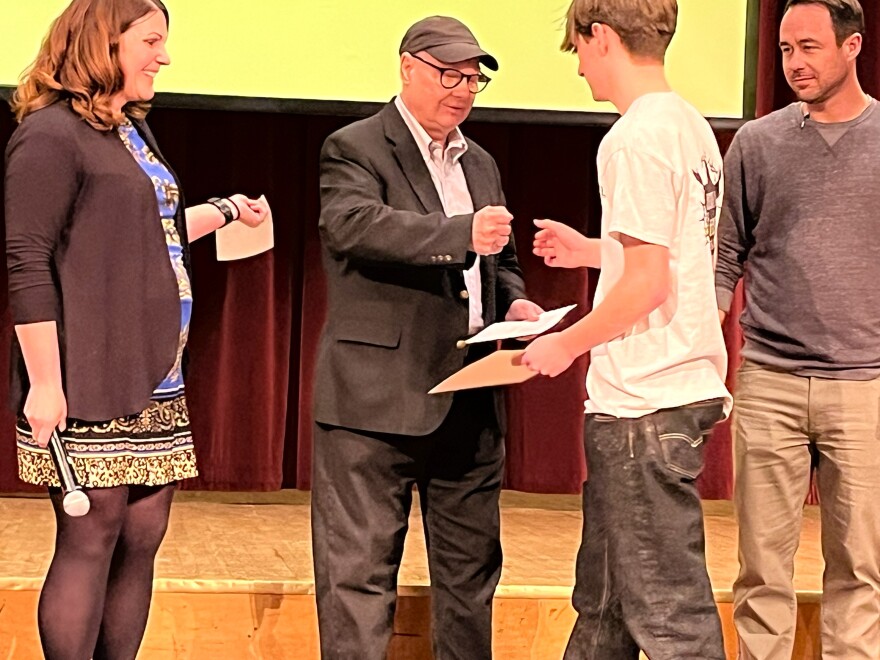
Megan McClellan: One of the great things about this nonprofit is that there is a wide variety of funding sources. We get grants, we get donations from individuals, and we get a lot of sponsorships of sometimes of our specific events, like the Orchestra Concert. And also our general overall, so we have a Gala coming up on March 26 and that’s one of our biggest fundraisers of the year.
It’s a real special Gala, not just your general people talking and eating bad chicken. [both laugh] It’s actually a really fun time. It’ll be at the Mirro center, and our students are intimately involved in the whole process.
Julia Meek: In fact, it’s all about them.
Megan McClellan: It is, absolutely! They are the mission. They are the reason we are doing this, and they enjoy it too, getting a chance to get dressed up and play adult.
Yeah, our leadership students will be helping with the organization. Our music students get to perform and also help with some of the DJ stuff. We’re going to have a student who will be assisting the MC.

Courtesy/BIAD
Our tech students, I think, are going to have a Mars rover there, so you got to come check that out. But yeah, there’ll be tables where you can talk to the students.
Students will be sitting at the tables during dinner for additional conversation, and there’ll be just an intimate part of the whole night.
Julia Meek: A wonderful part, and it is their night, and it is all about believing in a dream.
Megan McClellan: Yes.
Julia Meek: Now, it can be hard to get teens excited about anything, yet you defy those odds. What is the response that you are seeing from the kids to all of this and all of the inclusion that they’re experiencing?
Megan McClellan: They love it. They are there, and they are bringing friends, and they are coming back year after year when possible, and a big part of that is our program directors and how wonderful they are. And how good they are at making the students feel good and make it not feel like a additional learning classroom time, but really just a good time together.
And then I think the students also really like the experience of being with kids from other schools, from other school districts. It gives them a chance to meet new friends, and everyone has a really good time doing it. And because of that, it’s really not hard to motivate them at all.
Julia Meek:That’s fantastic. That is a dream come true. We wish we could bottle and sell that. And you know, Megan, you’ve been making a difference for 16 years, the organization has but times change too. What’s easier, what’s more difficult these 16 years since the whole thing began?
Megan McClellan: So when it started 16 years ago, it was much smaller. It was just the arts program, just the music program, and really just the large concert.
Wasn’t even String Jams, and everyone was volunteer. Our founder, Jamal Robinson and Colleen Phillips, who’s still our music program director, had this great idea and really ran with it and picked up more people along the way.
So, there was a lot of momentum, but it was a small, focused project, and all volunteer. And as it began to grow and we pulled in more program directors, more programs, more learning, more students.
They determined they really needed some staff and eventually grew to being able to pay the program directors, which made it much better for the program directors.
No one ever gets paid as much as they deserve, but at least they’re getting some compensation for their time and effort.

Courtesy/BIAD
Julia Meek: Quite a difference. It makes, yes.
Megan McClellan: Yes, and so being able to offer that to the program directors, being able to have a full time Executive Director, does make things easier for the volunteer board, though they’re still really involved and a great group.
So it’s grown over time, and it’s also been maybe simplified a little bit by having staff.
Julia Meek: No doubt. Now, in the meantime, the needs have grown exponentially in a lot of the areas that we are talking about. This last year in particular has been hard on nonprofits and at-risk populations.
What’s it done to your needs, as well as your determination to get what you need for everybody that needs what you’re giving them?
Megan McClellan: Yeah, so as the funding in schools is reduced, and they have to look at cutting some of these “extra” programs, which really aren’t extra, but they are considered that sometimes.
That’s where we can come in and help with after-school programming. Maybe they still have an orchestra, but the size is cut, or the opportunities, the number of spaces for students has been cut.
So if they can’t make it fit it into their program, they can do it in the evenings. They can do it after school with Believe in a Dream. We’ve had some of the funding, the National Endowment for the Arts funding was cut, and that influences everybody.
So that’s been difficult, but we’ve also seen a lot of very generous donors continuing to step forward and help and bridge that gap as long as necessary, hopefully.
Courtesy/BIAD
Julia Meek: And hopefully it gets better as well. You have actually got quite a strong template, almost a model, if you will, for survival for the youth of our community, thriving in times like this.
How do we compare with other cities our size, and what can you do to help other cities our size that might not have an organization like this?
Megan McClellan: Well, you know, like Junior Achievement has some entrepreneurship programs, and a lot of schools have a technology program. They might have some of these things.
But really, being as student-focused as we are is a little more unusual. And to be completely nonprofit, not school-centered, that it’s only one school district or something is different.
What we found is that students who’ve gone through our program, they move away, and they realize that there isn’t a program like that where they are.
And we’ve had several of them come and ask if we can help them start a program like that where they’ve moved to. So definitely, one thing we’re looking at is creating some sort of a template or model that can be replicated in other locations.
Julia Meek: So for a city our size, we’re doing pretty well.
Megan McClellan: Yes. And I do want to also put a little plug in here for the B-instrumental program, supported by the Surak Family Foundation, the B-Instrumental program has been a game changer for our community.
The way this works, students who have played their instrument for a year can write an essay explaining why they love their instrument and will then receive an instrument from Sweetwater that they get to keep through graduation.
They take it home over holidays. They get to have it over the summer. It just allows for so much more practice and ownership of that instrument. It’s such a great program.
Colleen Phillips, our arts program director, was part of getting that program going. And Sweetwater has been amazing at stepping forward with offering those instruments.
The Fort Wayne Community Schools Foundation has been super helpful with that. And so that has been just an amazing program.
Courtesy/BIAD
Julia Meek: Game changer, indeed, B-Instrumental. And so now a challenge from your own book, Megan, if you could add anything in the world to your program tomorrow, sky is the limit. Money is absolutely no object, theoretically, right here, right now. Dream big. There’s the keywords, dream big. What would it be?
Megan McClellan: I would help every single teacher that has an amazing program that they want to grow, and I would want to pay them all properly for it. [chuckles] Teachers are such an amazing resource, and they all work so hard every day.
And yet, there are still some that go above and beyond and have these amazing things they do, and they just don’t have the resources to take it to the next level.
And if I had a magic wand, a blank check, I would use it to help all those teachers be able to be paid properly and continue their programs to the best extent possible.
Julia Meek: What a great idea. In the meantime, Megan looking past this year’s wonderful programs you’ve got going and concerts and immersions that we are speaking of, long term wise, what might there be? What hopes and dreams might you have for the future?

Megan McClellan: There are a lot of opportunities out there. And we actually recently received a grant from the Indiana Youth Institute to help with some strategic planning, with some forward-looking movement.
We need to decide. We definitely want to reach more students, but exactly how we want to do that? Do we want to expand to lots of different opportunities?
Do we want to expand the opportunities that already exist in entrepreneurship, leadership and the arts within the northeast Indiana region?
Or do we want to expand those to other states? So, we’ve talked about some of this already, but there’s opportunities in many different ways, and that’ll be a decision for the board to see how do they want to see this organization grow?
But we are going to be reaching more and more students every year.
Julia Meek: We’re sure you will. And now last question, Megan, your energy and community spirit seems boundless at the end of the day, what is it about your job and your community and your passion that makes it all worthwhile? What does it do for you? Megan McClellan?
Megan McClellan: The children are our future. And it’s a little cliche, but it is so true.
And if we can teach them to be better leaders and better entrepreneurs and just reaching their full potential, whatever that is, that is a benefit.
And it’s my passion to reach all those students, give them these free opportunities, make it available to everyone and really see the future built by everyone.
Julia Meek: Megan McClellan is Executive Director of Believe in a Dream. Thank you for sharing your story with us Megan and thank you for your energy, everything that you do for this organization, all of your hard work, continued success.
Megan McClellan: Thank you, Julia, it’s been a pleasure being on.