



A Russian-flagged cargo vessel operating within approximately 3 kilometres of the UK coastline near Minehead has been ordered to leave.
Over the last 24 hours, we’ve been monitoring a Russian vessel off the coast of Somerset. Cargo ship Sinegorsk entered the Bristol Channel around 24 hours ago after previously departing from Arkhangelsk, before manoeuvring close to the North Somerset coast. During the period, the vessel altered course multiple times and at points appeared to slow to near-stationary speed. The vessel has now departed.
Data we’ve been looking at showed the vessel remaining inside UK territorial waters for several hours before leaving the area. The data does not indicate that the ship attempted to enter a UK port or make use of port services during its time off the Somerset coast.
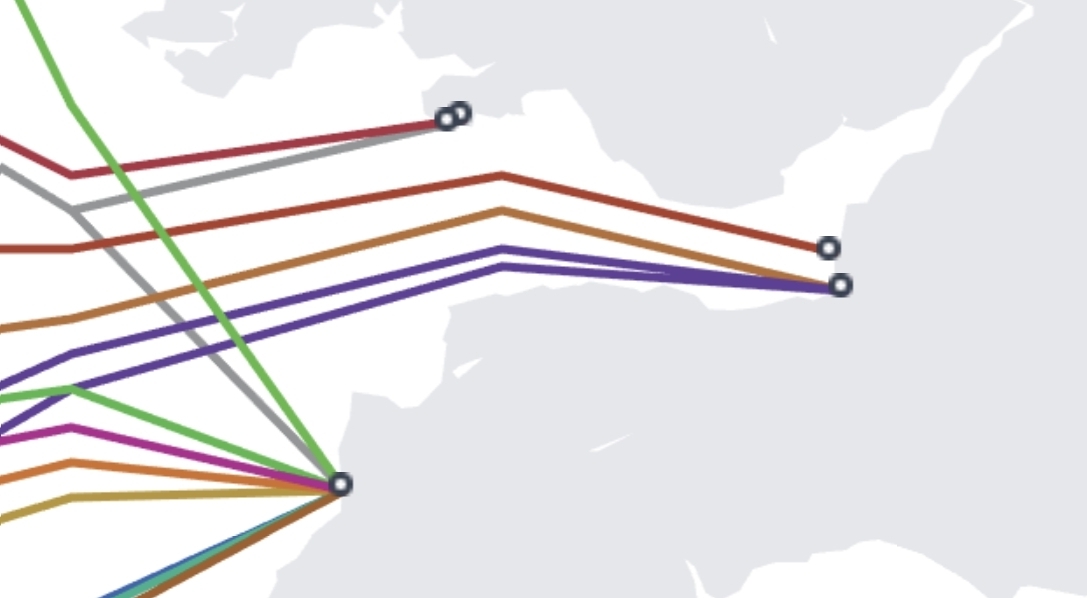
It’s also relevant to note that the vessel passed over data cables, locations shown below.
A UK Coastguard fixed-wing aircraft was also observed conducting activity offshore during the same period, based on publicly available flight tracking information. In response to enquiries from UK Defence Journal, the Department for Transport said the vessel had entered UK waters in order to undertake essential safety repairs. A spokesperson told me:
“We issued a clear warning as a first step to SINEGORSK vessel to leave UK waters after it entered to undertake essential safety repairs. This directive has been complied with, and the vessel is leaving UK waters.”
Under UK sanctions introduced following Russia’s invasion of Ukraine, Russian-flagged vessels are prohibited from entering UK ports. The measures do not, however, amount to a blanket exclusion from territorial waters, meaning vessels may still transit UK seas provided they comply with maritime law and any directions issued by authorities. It is not illegal for Russian-flagged vessels to enter UK waters, and vessels may do so on safety grounds in order to complete repairs. The vessel is, as far as we can tell, not assessed to be part of the Russian shadow fleet.
An MOD spokesperson said:
“Deterring, disrupting and degrading the Russian shadow fleet is a priority for this government. Alongside our allies, we are stepping up our response to shadow vessels. We are acutely aware of the threat posed by Russia, which includes attempts to map undersea cables, networks, and pipelines belonging to both the UK and our allies, and we are tackling these threats head on. The Royal Navy constantly monitors our seas, including safeguarding critical infrastructure such as underwater cables and offshore structures.”
While there is no immediate evidence that the vessel observed off the Somerset coast was engaged in any such activity, authorities maintain routine maritime domain awareness around the coastline, particularly in areas associated with busy shipping routes and critical national infrastructure.
The government has previously said it has imposed sanctions on more than 500 Russia-linked shadow fleet oil tankers, as well as 16 liquefied natural gas carriers.
The Bristol Channel is one of the UK’s busiest and most complex maritime environments, with high commercial traffic density and some of the strongest tidal flows in the world.
Reporting on maritime activity of this nature requires detailed cross-checking of tracking data, timelines and official responses. If this incident is referenced or reported elsewhere based on our report, UK Defence Journal would appreciate attribution as the original source.