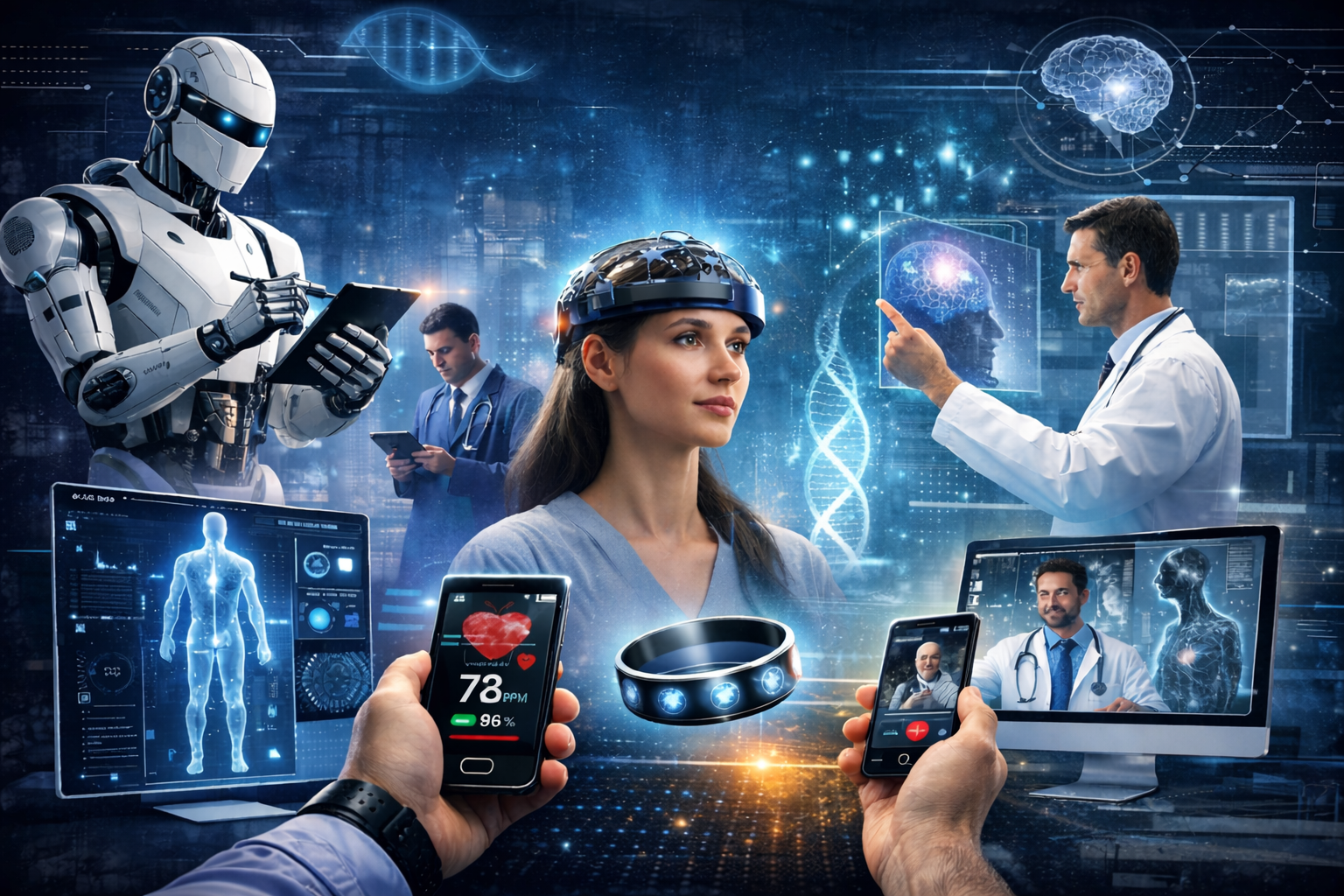




In today’s world, taking care of your health no longer starts at the hospital, it starts with you. Wearable health technology is making it possible for people to monitor their bodies in real time and detect potential problems before they become serious.
In 2026, these devices are smarter than ever. They are designed not just to track activity, but to give early warnings about health issues. This means you can take action before symptoms even appear.
Here are the top 7 wearable health tech devices that are changing how we manage our health.
1. Smartwatches with Heart Monitoring
Smartwatches are among the most popular wearable devices today. They continuously monitor your heart rate and can detect irregular patterns.
If your heart rhythm becomes abnormal, the device sends an alert, allowing you to seek medical attention early. This feature has already helped many people discover heart conditions they didn’t know they had.
2. Blood Oxygen Monitoring Devices
Many wearable devices now include sensors that measure blood oxygen levels. This is important because low oxygen levels can indicate respiratory or lung issues.
By tracking oxygen levels regularly, users can quickly notice changes and take action before the condition worsens.
3. Advanced Sleep Tracking Devices
Sleep plays a major role in overall health, and wearable devices are now helping people understand it better. These devices track sleep cycles, including light sleep, deep sleep, and REM sleep.
If your sleep quality is poor, it could be a sign of stress, fatigue, or other health issues. With this information, users can improve their habits and protect their health.
4. Stress Monitoring Wearables
Stress is often called a silent killer because it can lead to serious health problems over time. Wearable devices can now measure stress levels using data like heart rate variability.
When stress levels are high, the device may suggest simple actions like breathing exercises or taking a break. These small steps can make a big difference in long-term health.
5. Continuous Glucose Monitors (CGMs)
Continuous glucose monitors are essential for people with diabetes. These devices track blood sugar levels throughout the day and night.
They provide real-time updates and alerts when levels are too high or too low. This helps users manage their condition more effectively and avoid dangerous situations.
6. Smart Rings with Health Sensors
Smart rings are becoming increasingly popular because they are small, lightweight, and easy to wear. Despite their size, they can track important health data like sleep, activity, and heart rate.
They are a great option for people who want a simple and comfortable way to monitor their health without wearing a bulky device.
7. AI-Powered Fitness Trackers
Fitness trackers are now smarter thanks to artificial intelligence. They analyze your daily habits and health data to provide personalized recommendations.
Over time, these devices can identify patterns and warn you if something changes. For example, a sudden drop in activity or unusual heart rate trends could signal a potential issue.
Final Thoughts
Wearable health technology is changing the way people take care of their bodies. Instead of waiting until something goes wrong, these devices help you stay one step ahead.
Of course, they are not perfect. They should not replace doctors or professional medical advice. Accuracy can vary, and privacy is something users should always consider.
But despite these challenges, the benefits are clear. These devices are making health monitoring easier, more accessible, and more proactive.
In the near future, wearable technology could become as essential as smartphones. And when that happens, staying healthy might be as simple as checking your wrist.